
Southern Jewish Resilience, From Generation to Generation
The arsonist who confessed to burning Beth Israel Synagogue in Jackson, Mississippi, told police he targeted the building because of its “Jewish ties.”
What an odd phrase, I thought. As if there was nothing more than a flimsy connection between the building he aimed to destroy and the living tradition contained within it.
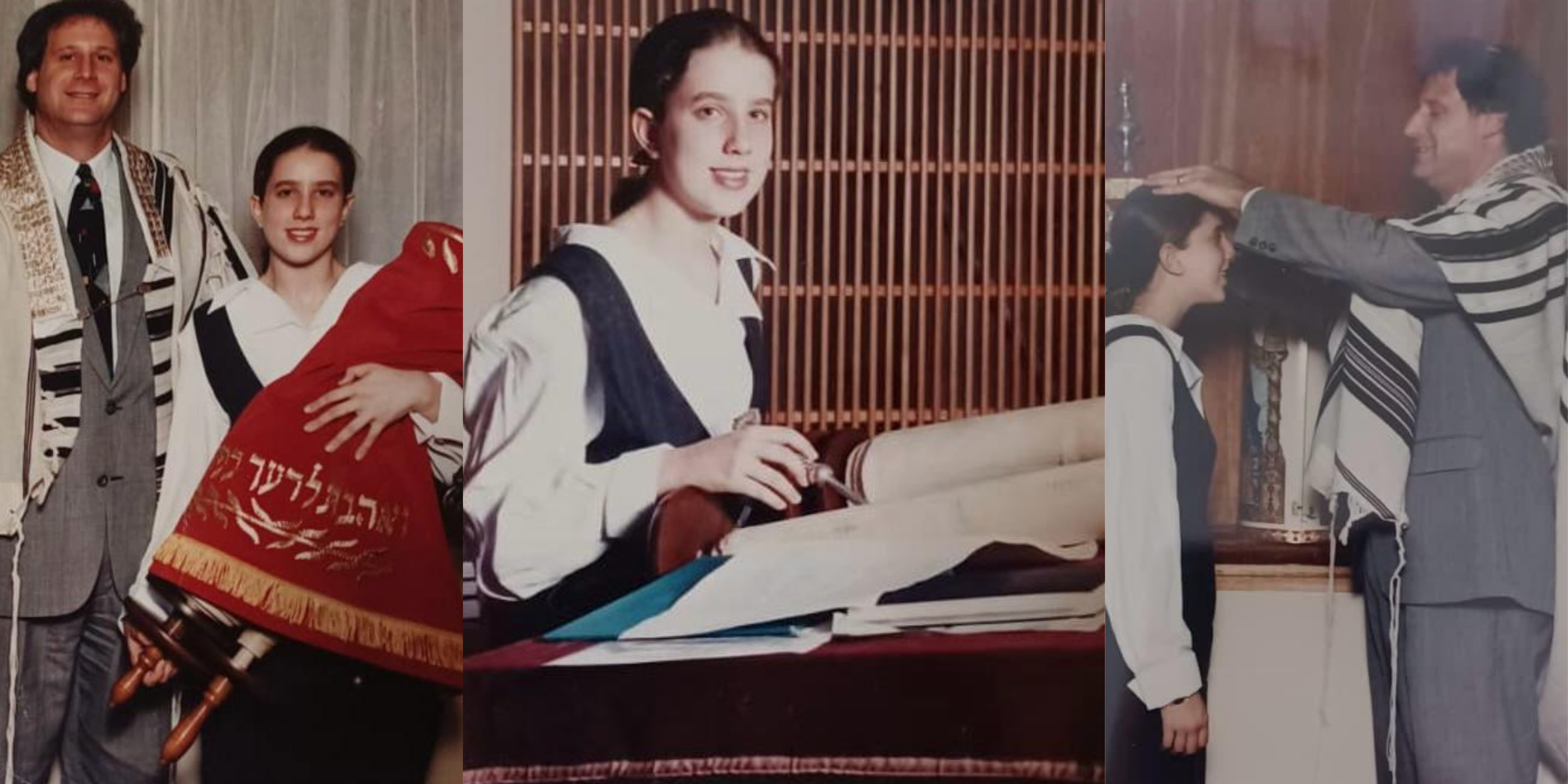
For those of us raised in one of the small communities scattered across the South, nothing could be further from reality. Many of us were lucky enough to spend our summers at Jacobs Camp, where our Jewish identity was celebrated, explored, nurtured, and affirmed. But during the rest of the year, that sense of immersion disappeared. Our towns didn’t have a day school or a Jewish Community Center. There was no kosher butcher or Jewish bookstore, no mikveh or chevra kadisha. And so our synagogues had to be everything to everyone all at once.
We listened to the blast of the shofar in the same auditorium where we giggled late into the night at youth group lock-ins. We learned our first Hebrew words in the same classroom where we organized against David Duke. We played each other in fierce games of one on one in the same space where we came together to mourn the murder of Yitzhak Rabin.
The synagogue gave us our only access to kosher corned beef sandwiches and pitas stuffed with falafel and Israeli salad; our only chance to sit in a sukkah or at a seder table; our only opportunity to hear firsthand testimony from Holocaust survivors who shuffled into the oneg after Friday night services, their tattooed arms sometimes reaching for a cookie at the same time as ours.
As Jewish minorities in the Bible Belt, some of us encountered open antisemitism; others simply learned what it meant to feel subtly, but perpetually, like an outsider. We were navigating a world where “Merry Christmas” was the default greeting and our sports teams recited the Lord’s Prayer before every game. Where we had to explain, again, why we missed school for Yom Kippur. Synagogue, like camp, was where we went to feel completely at ease in our Jewish skin.
In these sacred Southern spaces, the collective inheritance of our tradition intermingles with layers of personal memory. The shelves of our libraries are filled with dusty editions of the Talmud, the walls lined with black-and-white photographs of children who are now on the Temple board. Torah scrolls rescued from the Shoah rest in the aron kodesh, alongside memorial plaques bearing our grandparents’ names, illuminated year after year on their yahrzeits. For so many of us, Sunday’s fire was not just another horrific act of antisemitism. It was an attack on our very identity, an attempt to destroy the place where it has been formed, practiced and passed down for generations.
But Southern synagogues have survived violence and trauma before. And in the wake of the Beth Israel fire, I take comfort in the fact that so often, when tragedy strikes, we have been comforted and cared for not only by fellow Jews across the region but also by allies of other faiths.
When a hurricane rendered my childhood synagogue unusable, the Baptist church next door offered us their space for High Holiday services. Without being asked, they draped large cloths over the crosses in the sanctuary so that we would feel more comfortable. After the 2018 Tree of Life Synagogue shooting in Pittsburgh, the imam of the local mosque reached out to our rabbi to invite the congregation to an interfaith service of prayer and peace.
And so it has been in the aftermath of the Jackson fire. Within hours, faith leaders from across the city had reached out, offering the dislocated Jewish community their spaces for services. Outside the charred entrance, bouquets of flowers lay on the ground. Someone had left a simple note: “I’m so very sorry.” The arsonist may have aimed to sever the “Jewish ties”
Jackson Jews have to their community’s physical home, to the holy books and sacred artifacts kept inside it. But he grossly underestimated so much – our long legacy of resilience, the unbreakable commitment we have to our faith and our values, and most importantly, the Jewish — and Southern — tradition of caring for one’s neighbor, of standing arm in arm to overcome injustice and hatred.
NOTE: A version of this article originally appeared in The Forward.
About the Author
Rachel Fink
Rachel Fink is a Jacobs Camp Alum & Parent. Rachel is a Tel Aviv-based journalist covering Israel and the Jewish world. Her work has appeared in Haaretz, The Times of Israel, The Jerusalem Report, and Kveller.
RELATED POSTS
Week 3 Wonders: Maccabiah Magic & Shabbat Joy at Jacobs Camp
Shabbat Shalom from Jacobs Camp! We’ve had another incredible week here at camp! The summer is flying by, and we are having so much fun! You can see what we’ve been up to in our Week 3 in Review video. We’ve just wrapped up an amazing Maccabiah, our all-camp color...
The End is Near : Time at Camp is Valuable
When looking into the future, it can be a scary place—but there’s a good side to it: you can’t predict what will actually happen. At camp, you move up in units from Olim to Chalutzim. I’ll be honest—I don’t even know what I was thinking about back in Olim. Maybe food?...